Sunday, May 05, 2013

Soul and the Old Woman

From sunlight:
Soul And The Old Woman

What is the soul? Consciousness. The more awareness, the
deeper the soul, and when

such essence overflows, you feel a sacredness around. It's
so simple to tell one who

puts on a robe and pretends to be a dervish from the real
thing. We know the taste

of pure water. Words can sound like a poem but not have
any juice, no flavor to

relish. How long do you look at pictures on a bathhouse
wall? Soul is what draws

you away from those pictures to talk with the old woman
who sits outside by the door

in the sun. She's half blind, but she has what soul loves
to flow into. She's kind; she weeps.

She makes quick personal decisions, and laughs so easily.

-- Mathnawi: VI: 148-50
Version by Coleman Barks


The line numbering here is really incomplete as Barks has used ideas from preceding lines. Here are the lines as provided at IntraText (trans Whinfield):


O son, did you ever present your silver body
As an offering to the damsels pictured on bath walls?
Nay, you pass by those pictures though fair as Huris,
And offer yourself sooner to half-blind old women.
What is there in the old women which the pictures lack,
Which draws you from the pictures to the old women?
Say not, for I will say it in plain words,
'Tis reason, sense, perception, thought, and life.
In the old woman life is infused,
While the pictures of the bath have no life.
If the pictures of the bath should stir with life (soul),
They would uproot your love to all the old women.

What is soul? 'Tis acquainted with good and evil,
Rejoicing at pleasant things, grieving at His.
Since, then, the principle of soul is knowledge,
He who knows most is most full of soul.
Knowledge is the effect flowing from soul;
He who has most of it is most godlike.


Seeing then, beloved, that knowledge is the mark of soul,
He who knows most has the strongest soul.
The world of souls is itself entirely knowledge,
And he who is void of knowledge is void of soul.
When knowledge is lacking in a man s nature,
His soul is like a stone on the plain.
Primal Soul is the theatre of God's court,
Soul of souls the exhibition of God Himself.

...


Labels: ,

Saturday, February 07, 2009

Mary pregnant

From Sunlight today, an interesting snippet from the Masnawi by the Helminskis:
The Universal Soul met a separate soul
and placed a pearl on her breast.
Through such contact the soul, like Mary,
became pregnant with a heart-winning messiah.

Mathnawi II: 1183-1184
Version by Camille and Kabir Helminski

This comes from Book II, STORY IV. The Falcon and the Owls., where it is rendered thus by Whinfield:
Universal Soul had connection with Partial Soul,
Which thence conceived a pearl and retained it in its bosom.
From that connection, like Mary,
Soul became pregnant of a fair Messiah;
Not that Messiah who walked upon earth and water,
But that Messiah who is higher than space. *
Next, as Soul became pregnant by the Soul of souls,
So by the former Soul did the world become pregnant;
Then the World brought forth another world,
And of this last are brought forth other worlds.
Should I reckon them in my speech till the last day
I should fail to tell the total of these resurrections.

Abridged and Translated by E.H. Whinfield [1898]
* i.e., the spirit of the Prophet Muhammad, whom the Sufis identify with the Primal Soul.

Labels: , ,

Friday, February 22, 2008

on this and the "other" view

Mystical Meaning of "Daylight"

God has named the resurrection "that day;"
Day shows off the beauty of red and yellow.
Wherefore "Day" in truth is the mystery of the saints;
One day of their moons is as whole years.
Know, "Day " is the reflection of the mystery of the saints,
Eye-closing night that of their hidden secrets.
Therefore hath God revealed the chapter "Daylight," [Koran XCIII]
Which daylight is the light of the heart of Mustafa.
On the other view, that daylight means "The Friend,"
It is also a reflection of the same prophet.


Masnavi I Ma'navi Book II, Story I, trans Whinfield

In the Name of God, the Merciful, the Compassionate

93:1   By the white forenoon
           and the brooding night!
           Thy Lord has neither forsaken thee nor hates thee
           and the Last shall be better for thee than the First.

93:5   Thy Lord shall give thee, and thou shalt be satisfied.

           Did He not find thee an orphan, and shelter thee?
           Did He not find thee erring, and guide thee?
           Did He not find thee needy, and suffice thee?

93:9   As for the orphan, do not oppress him,
           and as for the beggar, scold him not;
           and as for thy Lord's blessing, declare it.


XCIII The Forenoon 93:1-11, trans Arberry

Labels: , , , , ,

Monday, February 04, 2008

the cup gets a bad press

Be not intoxicated with these goblets of forms,
Lest you become a maker and worshipper of idols.
Pass by these cups full of forms, linger not;
There is wine in the cups, but it proceeds not from them.
Look to the Giver of the wine with open mouth;
When His wine comes, is not cup too small to hold it?


Rumi: Mathnawi Book VI, Story IX, trans Whinfield


These are the opening verse lines of a story called "The King and his Three Sons". It has a classic fairy tale format in which the eldest and middle sons fail in an important quest but the youngest succeeds. Rumi left the story unfinished with little elaboration on how the third prince achieved what the first and the second did not.

Since Rumi often uses the idea of "the King" as a synonym for God, this story effectively allows that God might have three sons or have a trinity potential that can be manifested or realized as three divine offspring. The Jungians would see this as the Self differentiating into three conscious functions with the two primary ones being inadequate to the task of full individuation. It is the third - or "inferior" - function that connects consciousness to the unconscious and ultimately leads to wholeness or a state of kingliness.

Was Rumi beginning to understand this? Was it dawning on him - or had it already dawned on him - that the Christian trinity had some validity to it? Was this why he balked at finishing this story? According to one tradition - or edition of the Mathnawi - Rumi's own son provided a commentary as follows:

Part of the story remains untold; it was retained

In his mind and was not disclosed.

The story of the princes remains unfinished,

The pearl of the third brother remains unstrung.

Here speech, like a camel, breaks down on its road;

I will say no more, but guard my tongue from speech.

The rest is told without aid of tongue

To the heart of him whose spirit is alive.


by Bahau-'d-Din Sultan Valad according to Bulaq edition of Mathnawi, trans Whinfield as above


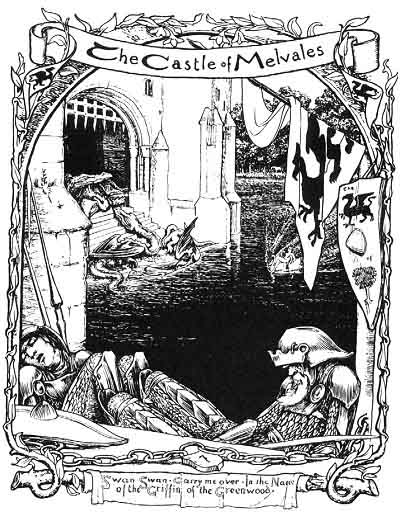
fairy tale illustration

Illustration by John D. Batten to the story
"The King of England and his Three Sons"
in Joseph Jacobs: More English Fairy Tales
@ Sacred Texts


Labels: , , ,

Saturday, December 08, 2007

courage?

Then comes an anecdote of a cowardly Sufi who boasted of his bravery, but had not courage enough even to slay a captive infidel. Verily, the "greater warfare," viz., that against one's own lusts and passions, demands as much courage as the "lesser warfare" against the infidels.

from Rumi: Masnavi I Ma'navi, Book V, translated by E.H. Whinfield [1898]

source

What kind of "courage" is needed to slay a non-Muslim captured during a raid and now held helpless, unarmed? Surely, what the "cowardly" Sufi lacked was hard-heartedness. Surely, what stood between him and this act of "bravery" - slaying a helpless captive - was compassion, or perhaps a simple sense of conscience? Or is that too much to ask, even of the venerable Rumi?

Labels: , , ,

Wednesday, September 19, 2007

the hidden hand

See how the hand is invisible while the pen is writing;
the horse careening, yet the rider unseen;
the arrow flying, but the bow is out of sight;
individual souls existing,
while the Soul of souls is hidden.

Rumi: Mathnawi II:1303-1304
version by Camille and Kabir Helminski via Sunlight


These lines come from a lengthier meditation around the Koran 8:17 which reads:

You did not slay them, but God slew them; and when thou threwest, it was not thyself that threw, but God threw, and that He might confer on the believers a fair benefit; surely God is All-hearing, All-knowing.


trans Arberry


The first line (of this excerpt) also seems to be echoing that most famous quatrain from Omar Khayyam:

The Moving Finger writes: and, having writ,
Moves on: nor all thy Piety nor Wit
Shall lure it back to cancel half a Line,
Nor all thy Tears wash out a Word of it.


Omar Khayyam, version by Edward Fitzgerald


In Khayyam's version, we get a sense of the inevitability of events as nature's immutable laws are applied to the "now", creating a fixed past and (implicitly) determining a fated future. It is very much a Newtonian world befitting an astronomer-poet but it can be read as equally true whether from an atheistic or from a theistic standpoint (as is quite common in Khayyam).

In the Whinfield version, Rumi's meditation ends with another echo from Khayyam as follows:

Whatsoever is seen is weak and base and impotent;
What is hidden is equally fierce and headstrong.
We are the captured game; who is the snare?
We are the balls; where is the bat?
He tears and mends; who is this tailor?
He fans and kindles the flame; who is this kindler?
At one time He makes the faithful one an infidel,
At another He makes the atheist a devotee!


Rumi: Masnavi I Ma'navi: Book II, Story V, trans E.H. Whinfield


The Ball no Question makes of Ayes and Noes,
But Right or Left as strikes the Player goes;
And He that toss'd Thee down into the Field,
He knows about it all--HE knows--HE knows!


Omar Khayyam, version by Edward Fitzgerald


Clearly this Ultimate Agent is capable of both "yes" and "no", of both "right" and "left", of both tearing and mending, of driving humanity to despair or to total worshipful commitment. Put baldly, this Ultimate Agent is capable of both Good and Evil, of both Just and Unjust, of both True and False, of both Beauty and Filth. As embodied in the Islamic deity Allah, He even admits such quite plainly:

Wherever you may be, death will overtake you, though you should be in raised-up towers. And if a good thing visits them, they say, 'This is from God'; but if an evil thing visits them, they say, 'This is from thee.'

Say: 'Everything is from God.' How is it with this people? They scarcely understand any tiding.

Whatever good visits thee, it is of God; whatever evil visits thee is of thyself. And We have sent thee to men a Messenger; God suffices for a witness.

Whosoever obeys the Messenger, thereby obeys God; and whosoever turns his back -- We have not sent thee to be a watcher over them.

They say, 'Obedience'; but when they sally forth from thee, a party of them meditate all night on other than what thou sayest. God writes down their meditations; so turn away from them, and put thy trust in God; God suffices for a guardian.

What, do they not ponder the Koran? If it had been from other than God surely they would have found in it much inconsistency.


Arberrry version: IV:80-84 [my emphasis]


In case Arberry is confused, here is another version:

78 Wheresoever ye may be, death will overtake you, even though ye were in lofty towers. Yet if a happy thing befalleth them they say: This is from Allah; and if an evil thing befalleth them they say: This is of thy doing (O Muhammad). Say (unto them): All is from Allah. What is amiss with these people that they come not nigh to understand a happening ?

79 Whatever of good befalleth thee (O man) it is from Allah, and whatever of ill befalleth thee it is from thyself. We have sent thee (Muhammad) as a messenger unto mankind and Allah is sufficient as Witness.

80 Whoso obeyeth the messenger hath obeyed Allah, and whoso turneth away: We have not sent thee as a warder over them.

81 And they say: (It is) obedience; but when they have gone forth from thee a party of them spend the night in planning other than what thou sayest. Allah recordeth what they plan by night. So oppose them and put thy trust in Allah. Allah is sufficient as Trustee.

82 Will they not then ponder on the Qur'an ? If it had been from other than Allah they would have found therein much incongruity.


Pickthall version: 4:78-82 [my emphasis]


In summary, then, Allah is the Absolute Agent behind Absolutely Everything (implicitly including both Good and Evil). And yet - almost in the same breath - Allah denies that He is behind the Evil, for that is humanity's responsibility, not His. Thus does He demonstrate His capacity for mendacity, injustice, delusion, or witlessness, depending on how one reads this second declaration. Finally, just two breaths away, He boasts of His own logical consistency as evidence of His authorship of the Koran. The implication is that it would have come from Satan had it contained incongruities. Since He has just baldly demonstrated these very incongruities, we are left with a Being that surely embodies both Good and Evil, both Allah and His own shadow Satan.

Much as Islam, through Jasser, shot itself in the foot in my last post, so in this one it is Allah Himself who shoots Himself in the foot.

I'm adult enough and have seen enough of the world to know that it is true that Good and Evil sit together in this world, as do Truth and Falsehood, Justice and Injustice, and so on. It is in my nature to prefer a deity that admits as much rather than indulging in this hypocritical game that Allah so delights in. That is why I prefer my own Goddess of the Perfect Mind:

For I am the first and the last.
I am the honored one and the scorned one.
I am the whore and the holy one.
I am the wife and the virgin.

...

I am the one who is honored, and who is praised,
and who is despised scornfully.
I am peace,
and war has come because of me.
And I am an alien and a citizen.
I am the substance and the one who has no substance.

...

I, I am sinless,
and the root of sin derives from me.
I am lust in (outward) appearance,
and interior self-control exists within me.
I am the hearing which is attainable to everyone
and the speech which cannot be grasped.
I am a mute who does not speak,
and great is my multitude of words.


The Nag Hammadi Library: The Thunder, Perfect Mind, translated by George W. MacRae @ gnosis.org
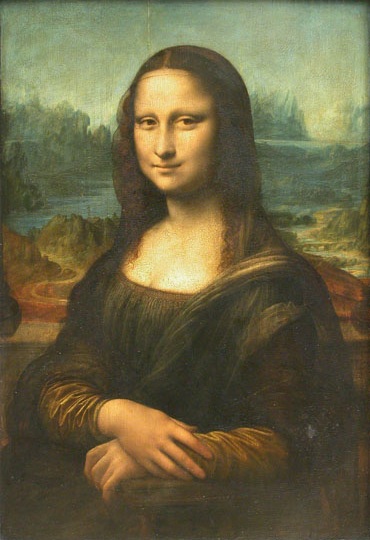

mona lisa


.

Labels: , , , ,