Friday, July 13, 2012

the flame of the tongue

Now I pass to you this silence, 
so that the alternations of night and day 
with their flaming language 
may finish the story. 

... Barks ...

Now I close these two lips, so that the lamp of day and night
even with the flame of the tongue may tell you the whole story.

... Arberry ...

From Sunlight: The Meeting - Ghazal 45

Labels: ,

Friday, February 22, 2008

on this and the "other" view

Mystical Meaning of "Daylight"

God has named the resurrection "that day;"
Day shows off the beauty of red and yellow.
Wherefore "Day" in truth is the mystery of the saints;
One day of their moons is as whole years.
Know, "Day " is the reflection of the mystery of the saints,
Eye-closing night that of their hidden secrets.
Therefore hath God revealed the chapter "Daylight," [Koran XCIII]
Which daylight is the light of the heart of Mustafa.
On the other view, that daylight means "The Friend,"
It is also a reflection of the same prophet.


Masnavi I Ma'navi Book II, Story I, trans Whinfield

In the Name of God, the Merciful, the Compassionate

93:1   By the white forenoon
           and the brooding night!
           Thy Lord has neither forsaken thee nor hates thee
           and the Last shall be better for thee than the First.

93:5   Thy Lord shall give thee, and thou shalt be satisfied.

           Did He not find thee an orphan, and shelter thee?
           Did He not find thee erring, and guide thee?
           Did He not find thee needy, and suffice thee?

93:9   As for the orphan, do not oppress him,
           and as for the beggar, scold him not;
           and as for thy Lord's blessing, declare it.


XCIII The Forenoon 93:1-11, trans Arberry

Labels: , , , , ,

Sunday, December 30, 2007

peace through appeasement? nay, peace through war

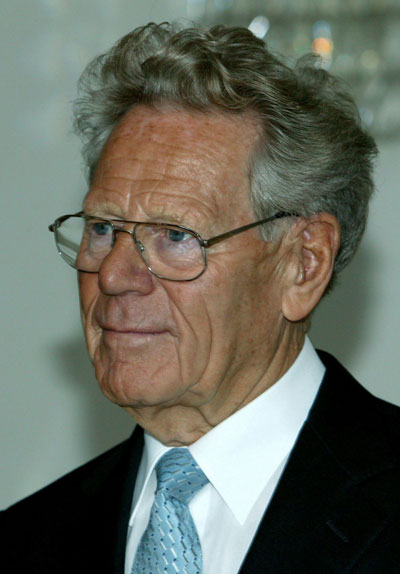
Today, Salim Mansur has drawn my attention to the Swiss Roman Catholic theologian, Hans Küng. I've not read any of his many books but will look out for his writings when next at the library. For this post, I've relied on what is available on the internet, such as through wikipedia and reviews of his books. He appears to be a man of wide learning and of strong commitment, as well as having the personal gifts necessary to bring these into the public arena so as to make a real and practical impact on his world. I admire those qualities and cannot but be impressed.

küng

Hans Küng in 2005


Mansur opens with what he calls Küng's "theorem": "No peace among the nations without peace among the religions." As a mathematician myself, I find the use of this term puzzling since a theorem is something that can be formally proved. Küng's statement has more of the quality of a mantram or a slogan. The terms are ill-defined, making it impossible to assess the statement's real worth. It has an undeniable "feel good" ring to it and sets forth a worthy goal, but this is precisely what mantras and slogans merely amount to.

What has more substance for me is the simple fact that Mansur has bothered to read Küng's lengthy work on Islam and considered it worth a focus in his weekly article for the Toronto Sun. That demonstrates his continuing openness to the very dialogue that Küng recommends, albeit within the confines of a scholarly and somewhat prim conversation. As he himself reminds us, this openness is not too common among Muslims:

There is no Muslim scholar I can readily think of who might be mentioned in the same breath as Kung for engaging with similar devotion and humility in the study of Judaism and Christianity, while putting aside any expectation that Muslims should similarly engage in studying and learning from the faith-traditions nominally described as Eastern religions.

from Salim Mansur: Theologian finds peace path


The comparative study of religions has been very much a part of the scientific spirit of world discovery, perhaps more aptly described as a discovery of worlds since each faith-tradition is like a different world. There is indeed little evidence of a similar outgoing curiosity from within the Islamic world except, historically, among some of the Sufis.

When Rumi, for example, touches on the life of Jesus or of Job, it is clear that he has researched these earlier "prophets" through the actual scriptures of Judaism and Christianity.

In the case of Job, there is virtually no information about him in the Koran. For a Muslim to know Job's story, he must go to the Old Testament book and read there directly. It's clear that Rumi had done this or had an intimate acquaintance with those who had. He knew his Job and he knew his Jesus.

I've never encountered this kind of knowledgeability among other Muslim writers, whether past or present.

And if the stories told of his funeral are even partly true, then Rumi did achieve this rare understanding across religions that Küng and similar proponents of "interfaith dialogue" are seeking.

There is, however, a fatal flaw in the approach of well meaning men like Küng. It is an easy exercise to find parallels and similarities between religions. However, real "peace" is not possible unless the differences are honestly and forthrightly confronted rather than politely glossed over. This is a main criticism coming out of the following review of Küng's book on Islam:

Although well aware of questionable, or at least all too human, aspects of Muhammad’s life, Küng demands categorically that Christian theology and the Christian Churches should recognise “without reservation” that: “Through the Qur’an the Prophet gave countless people in his century and in the centuries that followed infinite inspiration, courage and power to make a new religious beginning: a move towards greater truth and deeper knowledge and a breakthrough towards enlivening and renewing traditional religion. Islam was the great help in life”.

But the Christian believer and theologian cannot but judge this statement about the person of Muhammad and of the Qur’an as unqualified and undifferentiated, not least in the light of the absolutely central Christian theological question at issue here: in the light of the life and teaching of the great biblical prophets Hosea, Jeremiah and Isaiah and especially and finally of Jesus of Nazareth and his Gospel, what are the adequate and God-pleasing “means” and ways of acting, which the true messenger of God is to employ to further the cause of God? Does not the way Muhammad opted for, namely, political and military means in furthering the cause of Islam, need to be viewed as objectively irreconcilable with the life, example and teaching of the non-violent, suffering “servant of Yahweh”?

from Christian Troll: Book Review for The Tablet


Küng has been quoted as saying: "As a matter of fact, you have deficiencies in all religions, but you have truth in all religions." The word "deficiencies" is a polite way of saying "falsehood" but an honest dialogue must address both the true and the untrue and it must especially focus on those areas where the "truth" of one religion clashes with the "truth" of another in a way that does not readily allow for overlap. In the case of Christianity and Islam, there are two especially hot spots: the mystery of the trinity and the very factuality of Jesus' crucifixion, letting alone its meaning.

I have tried to look into the first issue in some of my recent posts (under Trinity). On the second issue, I have considered the "dialogue" possibilities of looking at Rumi's ghazal 728 which compares Jesus with Hallaj. The pertinent lines are as follows:

That idea the Christian carries abroad, the Moslem has not that
idea, that He is slaying this Messiah upon the cross.
Every true lover is like Mansur, they slay themselves; show any
beside the lover who deliberately slays himself!


excerpt from ghazal 728, trans A.J. Arberry


Earlier this year, I offered this possibility to the Catholic priest conducting the course on Mysticism: Islamic and Christian Perspectives but he showed no interest in pursuing it. I'm not sure why it is so but this reluctance to honestly face up to these differences is as evident on the one side as on the other.

So for me, it's: Dialogue, schmialogue. We can go nowhere if appeasement is the only approach used. A war of words must be started, else a war of nuclear weaponry will likely take its place.

Labels: , , , , , ,

Wednesday, October 03, 2007

cutting the crap

I said, "Show me the ladder, that I may mount up to heaven."
He said, "Your head is the ladder; bring your head down under your feet."

from Rumi: Ghazal 19, trans A.J. Arberry, via Sunlight


In his notes to this translation, Arberry explains the second line above as meaning "prostration in prayer, the subjection of reason to spirit". Me, I read Rumi in my own way. I prefer to take his meaning more directly: to see - in this instance - a head under a foot and not, as Arberry would have it, a head submitting to Allah or spirit. A foot is a foot and a spirit is something almost diametrically opposite to that. To me, Rumi (through the divine guide or Friend) is simply advising that the best way to reach heaven or attain things we yearn for is to begin with reality, to begin simply with "what is".

Our feet, after all, are what connect us to the earth. As we walk about, the pressure on our feet is a constant reminder of our heaviness, of this gravitational pull of body to earth, and of our inevitable rootedness in reality. Of course, it is also human to aspire to something other than the reality we are in. We express that in our longing for the Beloved, in our ambition to climb higher and higher, thus achieving more and greater things. However, we go nowhere so long as our heads remain in the clouds of imagination and aspiration. The journey must always begin with the here and now, with things as they are.

Here in Australia, I believe largely as a result of our British heritage, we like to link "spirit" with dung of one sort or another, especially when mocking vaporous idealism. We exclaim: "what a load of bullshit!"; or more sharply command: "cut the crap!"

In the Islamic world, there is no one better at trying to get Muslims to bring their heads down under their feet than Wafa Sultan, the forthright realist of brief but potent Arab television fame. (Those powerful five minutes remain at YouTube.)

As brave as she is, however, Sultan is stronger on rhetoric than on fact. For example, she does say in her speech that:

We have not seen a single Jew blow himself up in a German restaurant. We have not seen a single Jew destroy a church. We have not seen a single Jew protest by killing people.

transcript from her appearance on Al Jazeera TV, February 2006


Unfortunately, this is not strictly true, especially not the last and more general sentence. It is justly claimed that it was Jews who carried out the first act of modern terrorism in the King David Hotel bombing. Many innocent civilians died, Jews included. Since I am an Israeli sympathizer, I understand what drove the Jews to do this. I don't see it as a petty act of revenge but a necessary and desperate act of survival for the Jewish people. Others less sympathetic might see it as a case in which Jews did indeed "protest by killing people".

Salim Mansur is another solid realist in the Muslim world, less flashy but equally determined, working in the quieter but more precise ways of the academic. For me, his strongest "cut the crap" message to the Muslim world is contained in a little known essay titled Muslim on Muslim Violence: What Drives It? (available from the Center for Security Policy). In it, he documents the genocidal atrocities perpetrated by Muslims on their so-called brothers-in-faith, starting in the first century of Islam and more recently expressed during the violent breakup of Pakistan in 1971. He attributes this self-destruction to a political corruption of the original message of Islam at the time of the Karbala massacre and he asks that Muslims take a hard look at this turning point in their history when this "official" Islamist ideology was adopted.

The difference between the two realities, that submitted by Sultan and that by Mansur, is that the first locates the error right in the heart of Islam, right in the very opening page of the Quran (the Fatiha). She has, as a consequence of this and of other experiences, turned her back on Islam as a spiritual path. Mansur, on the other hand, is loyal to the forces opposing this "official" political Islam, forces largely contained within or expressed through the Sufi traditions. In this way, he can still identify as a Muslim although most Muslims (being so largely politicized and under the sway of "official" Islam) would deny him that identity and thereby feel free to attack him in a violent physical way. Despite a loyalty to what he would see as the pure essence of Islam, he remains an apostate in the eyes of "official" Islam.

In terms of realism, of who has put their head more firmly under their foot, I have to favour the lady here. She may be making some slight errors in her enthusiasm to communicate forcefully, but the overall tenor of her message is, to my mind, correct. I believe that Mansur sees an ideal - or more correctly, an idealized - Islam, an Islam that might have been. There are enough elements in the Islamic faith tradition to keep that ideal alive for him.

And it is indeed a beautiful ideal, an ideal of brotherhood in faith, a transcending of all boundaries of race or tribe. It is an ideal very purely communicated by the likes of Llewellyn Vaughan-Lee, a modern Sufi of British origin, who promotes a world consciousness of Oneness. His message can be accessed through The Golden Sufi Center.

However, some ironic questions arise: Is this not precisely the message that Islam is meant to convey? Is the world now not divided precisely along the lines of who - or what - can best deliver this message of Oneness?

Wafa Sultan certainly doesn't see Islam as fit for the task. Salim Mansur might see Sufi Islam as fit. Vaughan-Lee is careful to downplay his Islamic allegiance in favour of a New Age purity, wearing his stark white outfits, sitting next to flower displays, and speaking in a tone of studied gentleness. There seems to be no fighter in him, not even of the spiritual sort. But still, he is a Sufi and a Muslim.

By contrast, Robert Spencer likes to quote Rumi on his allegiance to Muhammad thus:

Root and branch of the roses is
the lovely sweat of Mustafa [that is, Muhammad],
And by his power the rose’s crescent
grows now into a full moon.


quoted in Spencer: The Truth About Muhammad: Founder of the World's Most Intolerant Religion,
and also at his blog:
Blogging the Qur’an: Sura 6, “Cattle,” verses 1-83
original source is Annemarie Schimmel: And Muhammad Is His Messenger: The Veneration of the Prophet in Islamic Piety


It is clear what Spencer's intent is here, especially in the context of the Quranic verses on which he is commenting and which actually have no connection whatever to Rumi's lines. Spencer has merely found an excuse, any excuse, to point the finger at Rumi and tar him (and his fellow mystics such as al-Hallaj) with the same brush as he tars Muhammad himself. The message is: Don't trust the Sufis for they are as much "Muslims" and just as "bad" as any other Muslims.

And Spencer does have a point. For those, especially, who are appalled at Islamic violence, a sweet pure mystic like Vaughan-Lee is very attractive and his ideal of Oneness also. However, should one be tempted thereby to affirm the shahada (the affirmation of Muslim faith) then there is no going back for the gentle Sufi has brothers in Islam who forbid apostasy and will see to it that you stay put.

As outsiders - poor benighted kufrs that we are - we must take Islam for the reality that she is, both her good points and her bad. We cannot but respect Islam as a long-standing institution within humanity's history but the political ideology is, as Spencer keeps reminding us, a solid and real part of what Islam is. It is there at its very roots, in the Quran and in the life of Muhammad.

I love some of the good things, especially many of the lovely lines of wisdom of Rumi. However, I love the humanist in Rumi, not the Muslim. If, to his sensitivities and in his time, Mustafa did smell sweetly it is no longer true today. Too much of the dung at the heart of Islam has been uncovered. There is simply too much crap there to allow for a sweeter smell. Yes, perhaps there is a pearl inside that dung heap, but I have yet to discover it myself or have it shown to me.

For me, Rumi and his opus stand apart and independent of Islam. The wisdom, the pearls, therein can survive many a refiner's fire, whether that of the Islamists or the more recent one of those commercializing him. A few days ago the 800th anniversary of Rumi's birth was celebrated thus in Konya, Turkey:

rumi birthday

Whirling dervishes perform a sema ritual during a ceremony to mark the 800th birthday of the Sufi mystic poet Mevlana Jelaleddin Rumi in Konya, Turkey.
Photo: AP @ smh.com.au


When I saw this photo, I didn't know whether to laugh or cry and, indeed, I wondered whether Rumi himself would know which was appropriate. After some thought, I've decided that from his grave there would issue loud and hearty laughter: he would go with the guffaw.

Similarly, when it comes to Islam: I must also go with the guffaw.

Labels: , , , , ,

Wednesday, September 19, 2007

the hidden hand

See how the hand is invisible while the pen is writing;
the horse careening, yet the rider unseen;
the arrow flying, but the bow is out of sight;
individual souls existing,
while the Soul of souls is hidden.

Rumi: Mathnawi II:1303-1304
version by Camille and Kabir Helminski via Sunlight


These lines come from a lengthier meditation around the Koran 8:17 which reads:

You did not slay them, but God slew them; and when thou threwest, it was not thyself that threw, but God threw, and that He might confer on the believers a fair benefit; surely God is All-hearing, All-knowing.


trans Arberry


The first line (of this excerpt) also seems to be echoing that most famous quatrain from Omar Khayyam:

The Moving Finger writes: and, having writ,
Moves on: nor all thy Piety nor Wit
Shall lure it back to cancel half a Line,
Nor all thy Tears wash out a Word of it.


Omar Khayyam, version by Edward Fitzgerald


In Khayyam's version, we get a sense of the inevitability of events as nature's immutable laws are applied to the "now", creating a fixed past and (implicitly) determining a fated future. It is very much a Newtonian world befitting an astronomer-poet but it can be read as equally true whether from an atheistic or from a theistic standpoint (as is quite common in Khayyam).

In the Whinfield version, Rumi's meditation ends with another echo from Khayyam as follows:

Whatsoever is seen is weak and base and impotent;
What is hidden is equally fierce and headstrong.
We are the captured game; who is the snare?
We are the balls; where is the bat?
He tears and mends; who is this tailor?
He fans and kindles the flame; who is this kindler?
At one time He makes the faithful one an infidel,
At another He makes the atheist a devotee!


Rumi: Masnavi I Ma'navi: Book II, Story V, trans E.H. Whinfield


The Ball no Question makes of Ayes and Noes,
But Right or Left as strikes the Player goes;
And He that toss'd Thee down into the Field,
He knows about it all--HE knows--HE knows!


Omar Khayyam, version by Edward Fitzgerald


Clearly this Ultimate Agent is capable of both "yes" and "no", of both "right" and "left", of both tearing and mending, of driving humanity to despair or to total worshipful commitment. Put baldly, this Ultimate Agent is capable of both Good and Evil, of both Just and Unjust, of both True and False, of both Beauty and Filth. As embodied in the Islamic deity Allah, He even admits such quite plainly:

Wherever you may be, death will overtake you, though you should be in raised-up towers. And if a good thing visits them, they say, 'This is from God'; but if an evil thing visits them, they say, 'This is from thee.'

Say: 'Everything is from God.' How is it with this people? They scarcely understand any tiding.

Whatever good visits thee, it is of God; whatever evil visits thee is of thyself. And We have sent thee to men a Messenger; God suffices for a witness.

Whosoever obeys the Messenger, thereby obeys God; and whosoever turns his back -- We have not sent thee to be a watcher over them.

They say, 'Obedience'; but when they sally forth from thee, a party of them meditate all night on other than what thou sayest. God writes down their meditations; so turn away from them, and put thy trust in God; God suffices for a guardian.

What, do they not ponder the Koran? If it had been from other than God surely they would have found in it much inconsistency.


Arberrry version: IV:80-84 [my emphasis]


In case Arberry is confused, here is another version:

78 Wheresoever ye may be, death will overtake you, even though ye were in lofty towers. Yet if a happy thing befalleth them they say: This is from Allah; and if an evil thing befalleth them they say: This is of thy doing (O Muhammad). Say (unto them): All is from Allah. What is amiss with these people that they come not nigh to understand a happening ?

79 Whatever of good befalleth thee (O man) it is from Allah, and whatever of ill befalleth thee it is from thyself. We have sent thee (Muhammad) as a messenger unto mankind and Allah is sufficient as Witness.

80 Whoso obeyeth the messenger hath obeyed Allah, and whoso turneth away: We have not sent thee as a warder over them.

81 And they say: (It is) obedience; but when they have gone forth from thee a party of them spend the night in planning other than what thou sayest. Allah recordeth what they plan by night. So oppose them and put thy trust in Allah. Allah is sufficient as Trustee.

82 Will they not then ponder on the Qur'an ? If it had been from other than Allah they would have found therein much incongruity.


Pickthall version: 4:78-82 [my emphasis]


In summary, then, Allah is the Absolute Agent behind Absolutely Everything (implicitly including both Good and Evil). And yet - almost in the same breath - Allah denies that He is behind the Evil, for that is humanity's responsibility, not His. Thus does He demonstrate His capacity for mendacity, injustice, delusion, or witlessness, depending on how one reads this second declaration. Finally, just two breaths away, He boasts of His own logical consistency as evidence of His authorship of the Koran. The implication is that it would have come from Satan had it contained incongruities. Since He has just baldly demonstrated these very incongruities, we are left with a Being that surely embodies both Good and Evil, both Allah and His own shadow Satan.

Much as Islam, through Jasser, shot itself in the foot in my last post, so in this one it is Allah Himself who shoots Himself in the foot.

I'm adult enough and have seen enough of the world to know that it is true that Good and Evil sit together in this world, as do Truth and Falsehood, Justice and Injustice, and so on. It is in my nature to prefer a deity that admits as much rather than indulging in this hypocritical game that Allah so delights in. That is why I prefer my own Goddess of the Perfect Mind:

For I am the first and the last.
I am the honored one and the scorned one.
I am the whore and the holy one.
I am the wife and the virgin.

...

I am the one who is honored, and who is praised,
and who is despised scornfully.
I am peace,
and war has come because of me.
And I am an alien and a citizen.
I am the substance and the one who has no substance.

...

I, I am sinless,
and the root of sin derives from me.
I am lust in (outward) appearance,
and interior self-control exists within me.
I am the hearing which is attainable to everyone
and the speech which cannot be grasped.
I am a mute who does not speak,
and great is my multitude of words.


The Nag Hammadi Library: The Thunder, Perfect Mind, translated by George W. MacRae @ gnosis.org


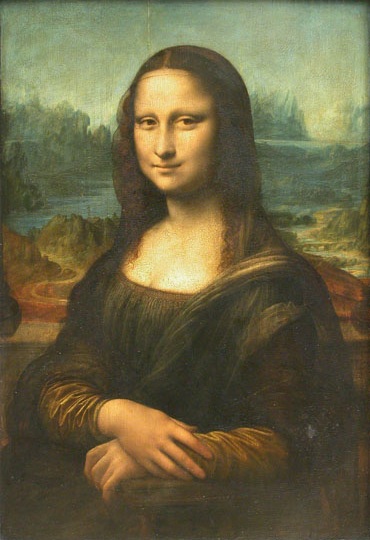
mona lisa


.

Labels: , , , ,