Friday, February 22, 2008

on this and the "other" view

Mystical Meaning of "Daylight"

God has named the resurrection "that day;"
Day shows off the beauty of red and yellow.
Wherefore "Day" in truth is the mystery of the saints;
One day of their moons is as whole years.
Know, "Day " is the reflection of the mystery of the saints,
Eye-closing night that of their hidden secrets.
Therefore hath God revealed the chapter "Daylight," [Koran XCIII]
Which daylight is the light of the heart of Mustafa.
On the other view, that daylight means "The Friend,"
It is also a reflection of the same prophet.


Masnavi I Ma'navi Book II, Story I, trans Whinfield

In the Name of God, the Merciful, the Compassionate

93:1   By the white forenoon
           and the brooding night!
           Thy Lord has neither forsaken thee nor hates thee
           and the Last shall be better for thee than the First.

93:5   Thy Lord shall give thee, and thou shalt be satisfied.

           Did He not find thee an orphan, and shelter thee?
           Did He not find thee erring, and guide thee?
           Did He not find thee needy, and suffice thee?

93:9   As for the orphan, do not oppress him,
           and as for the beggar, scold him not;
           and as for thy Lord's blessing, declare it.


XCIII The Forenoon 93:1-11, trans Arberry

Labels: , , , , ,

Wednesday, January 02, 2008

Rumi into French

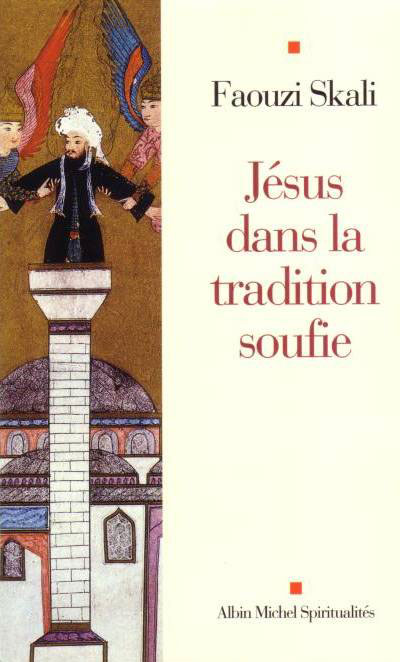
Eva de Vitray-Meyerovitch (1909-1999) was the Annemarie Schimmel of the French-speaking world with the difference that she converted to Islam from her native Christianity. She was also a parallel to Reynold A. Nicholson in having translated the full Mathnawi, in her case from the Persian into French. Though it's not evident from the bookcover, she co-wrote the book below on Jesus in the Sufi tradition.

eva de vitray

Eva de Vitray-Meyerovitch @ Islam y Al-Andalus


Eva de Vitray-Meyerovitch was a person absorbed by the inner quest for reality, and what is noteworthy in her itinerary is that her personal life and commitment were strongly linked with her intellectual investigations. They were directly inscribed into their logic. Of course, Rûmî became her spiritual mentor, just as if he took her hand and led her to the Muslim path. So she converted to Islam and until her death she used to fervently practice all the Islamic pillars and also Sufism.

source


Labels: , , , ,

Jesus as the Sufis saw Him

Lifted aloft by angels:

sufi jesus

bookcover showing a Sufi image of Jesus


It is, of course, a very Islamized Jesus, complete with turban and macho moustache.


Labels: , ,

creepy quotes from quadrant

A long but fascinating essay from Australia's Quadrant Magazine turned up today. Written by Fr Paul Stenhouse, it is titled Islam's Trojan Horse? Turkish Nationalism and the Nakshibendi Sufi Order. It piqued my interest especially since it relates to the local (Melbourne) scene, to interfaith efforts within the Roman Catholic Church, as well as to the issue of whether Sufism can serve as a counterpoint to Islamism.

As the title suggests, Stenhouse provides background information on the Nakshibendi Sufi Order and its influence within Turkish politics. He profiles leading lights of the Order such as Said Nursi and Fethullah Gülen and it is from sermons of the latter that the "creepy quotes" occur.

"You must move in the arteries of the system, without anyone noticing your existence, until you reach all the power centers …"

"The philosophy of our service is that we open a house somewhere and, with the patience of a spider, we lay our web, to wait for people to get caught in the web; and we teach those who do. We don’t lay the web to eat or consume them, but to show them the way to their resurrection, to blow life into their dead bodies and souls, to give them a life."

from sermons by Fethullah Gülen quoted in Paul Stenhouse: Islam's Trojan Horse? Turkish Nationalism and the Nakshibendi Sufi Order


web

photo from flickr/wikimedia commons


Stenhouse is clearly warning the naive interfaith dialogue enthusiast about the dangers of Islamist propaganda efforts, known as da'wa and quite likely to be clothed precisely in "dialogue" terms.

Dialogue has always been of paramount concern to Catholics. Nevertheless, goodwill alone, unsupported by accurate and comprehensive knowledge of Islam, is demonstrably not enough. In fact it can fatally distort the process for all participants in the “dialogue”, non-Muslims and Muslims alike. The latter immediately sense when good-hearted but ignorant and incautious non-Muslims are utterly unaware of, or are not in agreement about, what is at stake, or what the rules of the game are.

However we may wish it to be otherwise, it is a kind of mind game that we are playing. The stakes are high—and none of the clichés and double-talk of coffee-table ecumenism will serve us well in this struggle of wits.


My attention was also drawn to Stenhouse's bringing in Salim Mansur as a fellow repudiator of "the appeasement mentality" of elements in the liberal-left (which clearly can include the "softer" side of the Church itself).

A similar criticism of Western naivety and “suicidal” complacence was articulated recently by Salim Mansur, a columnist in the Toronto Sun. Mansur is a Muslim and the relevance of his insight is not confined to Canada. He describes what he calls “the appeasement mentality” of the mainstream liberal-left media, and of “politicians trolling for ethnic votes” and of “bureaucrats running public institutions” in the West. He quotes Theodore Dalrymple, a retired physician and prolific writer, who reported in New York’s City Journal:

“In an effort to ensure that no Muslim doctors ever again try to bomb Glasgow Airport, bureaucrats at Glasgow’s public hospitals have decreed that henceforth no staff may eat lunch at their desks or in their offices during the holy month of Ramadan, so that fasting Muslims shall not be offended by the sight or smell of their food. Vending machines will also disappear from the premises during that period.”

“Imagine the uproar,” comments Mansur, that would greet “any suggestion that the mainstream liberal-left media, in appearance at least, is treasonously on side with the newest enemies of freedom and democracy.”


For me, a central message of Stenhouse's long essay comes from a quote he gives from a fellow priest [my emphasis added]:

[T]he Director of the Centre for Arab–Christian Documentation and Research in Beirut, Father Samir Khalil Samir, SJ, ... noted that Christians often suffer from:

“a false understanding of the concept of tolerance. All this is an error and leads to the loss of one’s own identity. Never attack in word or deed, but seek the truth and always point out error. To say only half of what one is thinking is a lie; a complicit silence. Truth cannot co-exist with lies, intolerance and injustice.”


There is far, far too much of this kind of lying coming from the Christian but especially from the Catholic and Anglican Churches. Sadly, even though Salim Mansur might be the last Muslim the West can trust, he may also be guilty of this kind of lying.

For various different reasons, we are all too afraid to tell it frankly as it is and as we truly feel it.

Labels: , , , ,

Sunday, December 16, 2007

yes, Zuhdi, let's talk

The final installment of the NRO Q&A with Zuhdi Jasser arrived in my inbox today. A key question was as follows [my emphasis]:

Lopez: What’s the most important question you get when you speak on radical Islam?

Jasser: I would weigh the importance of all of the various questions I get with their centrality in promoting American security. That said, the most important question or concern I get from audiences to which I have the privilege to speak, is whether spiritual Islam and political Islam are in fact contrary to my beliefs — inseparable? And whether I am whitewashing a dangerous political ideology? An appropriate answer to this question would need volumes of discourse. Ultimately, I ask them not only to believe my voice and my ideas, which appear to be in the wilderness, but rather to begin the ground work of speaking to Muslims in the grass roots about their political and spiritual constructs. We need to multiply this debate exponentially within the Muslim community.

from NRO Q&A: We Need a Hero


In the interests of contributing to those "volumes of discourse", I'll throw my tuppence worth in here.

Jasser asks me to believe his voice and his ideas. I have no trouble with his basic sincerity but I have grave doubts regarding his capacity to sell his story fully to Muslims and non-Muslims alike. As Robert Spencer of Jihad Watch has expressed it, first in the positive, then in the negative:

Meeting intimidation with a demonstration of nobility and generosity. Bravo, Zuhdi Jasser.

source: U.S. Islamic group ...


This is very good, but of course it doesn't go far enough. I hope that M. Zuhdi Jasser would be willing to confront Taheri-azar's abundant Qur'an quotations, and the role of the example of Muhammad in inspiring jihad violence today. If he is, and if others like him are, then there might really be some progress toward the ideological confrontation with jihadism that he calls for.

source: American Muslim leader ...


Jasser especially urges "speaking to Muslims in the grass roots" but this I have attempted several times, always with highly discouraging results. I'm met with a variety of evasions, defensive walls, threats and even pleas to desist, along the lines of:


  • "It is generally impolite to discuss religion and politics. Just raising these matters is offensive and a sign of belligerence and intolerance."

  • "You don't know Islam. You're an ignorant Kafir."

  • "Be careful what you say or even suggest against Islam as we Muslims will defend our faith with violence if need be and that includes violence against you, your loved ones, and your possessions. The police won't help either, not if you merely find your pet cat poisoned or a deep scrape in your car's paintwork."

  • "We're terrified ourselves of the violent Muslims and we don't want to be seen associating with a non-Muslim on anything more than the most superficial level. Let's talk about the weather, that's fine, but no more. And even there, let's not talk about God bringing the rain or the sunshine. Leave God out of it."


Nowhere is there any honest and forthright debate. Nowhere. Even Jasser himself is evasive, rarely making direct references to the Koran or the life of Mohammad.

At the very end of the interview Lopez asks: "Who are your heroes?" Jasser provides a list of four men: his grandfather and namesake Zuhdi Al-Jasser, US Presidents Reagan and Jefferson, and fictional TV hero Jack Bauer. What kind of a Muslim leaves Mohammad out of a list like that? Is Mohammad absent because Jasser has genuinely come to repudiate him as a role model or is he not there because Jasser is practising a form of taqiyyah, diplomatically neglecting to mention something that might sound too "un-American".

To convince me, Jasser will need to do far more than denounce Islamists (under whichever of their many names). He will need to put some substance into his airy-fairy assertion that there is a separate spiritual Islam unpolluted by Islamist political ideology.

This is how I see it:


  • The Koran, the life of Mohammad, the traditions and the classical interpretations form a coherent whole with a clear Islamic supremacist message: God is One, His Centre is located at Mecca, His Final Prophet was Mohammad, His Final Word was the Koran, no other conception of deity has any validity, the Jewish and Christian conceptions are especially pernicious for making apparently credible but deceptive claims, and it is the duty of every Muslim to spread the One True Faith of Islam whether by the sword, by unrestrained fertility, by the (literal or metaphoric) handing out of sweets to children, or by forceful evangelization.

  • "Nice" Muslims like Jasser are employing the tactic of handing out metaphoric sweets to gullible adults.

  • Yes, there is "a spiritual Islam" of sorts. There is a mystical tradition, called Sufism, which arose within the Islamic empire but has clear influences from abroad, from outside the core supremacist Islamic tradition described above. Those influences include much Hindu and Buddhist mysticism, deep and direct influences from Zoroastrian, Christian and Jewish sources (through an actual reading of and meditation on their sacred texts), as well as wider Mediterranean influences (such as Greek neoPlatonism and ancient strands of Egyptian alchemy and theosophy). The core values of Sufism can be represented by the poetic works of one man alone, known to us all as Rumi. However, if you took his two major works, the Mathnawi and the Shams collection, and removed from them every clear Islamic (Koranic or Mohammadan) reference, then you would still be left with an oceanic and essentially divine corpus. Take Islam out of Rumi and you're still left with the Divine.

  • Do a similar but opposite job on the main Islamic works, especially the Koran itself: remove every clear supremacist, political, ideological statement - every "Islamist" statement - and what remains? Perhaps a puddle or two of insipid and unoriginal pronouncements as to the glory of God. The kind of thing that a dozen monkeys on a dozen typewriters could easily produce in a dozen days.


I'm happy to discuss any of this with you, Zuhdi, at whatever length you wish, here or elsewhere.

I'm prepared to be infinitely patient but not to the point of holding my breath. I will continue to be engaged in many other activities such as enjoying the fruits of the rich culture to which I'm fortunate to be an heiress. Stuff like Beethoven and professional tennis, but especially stuff like civilized adult conversation unfettered by fear or favour.

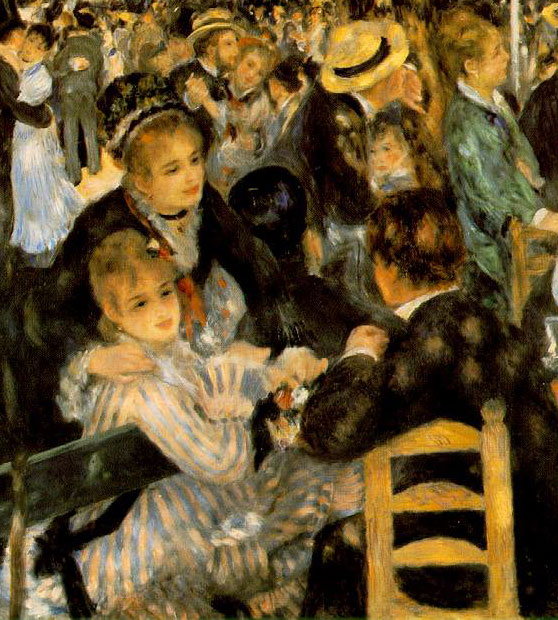
renoir conversation

detail from Pierre-Auguste Renoir: Le Moulin de la Galette, 1876


Yes, Zuhdi, let's talk. I'm ready, willing, and waiting.


Labels: , , , , ,

Saturday, December 08, 2007

courage?

Then comes an anecdote of a cowardly Sufi who boasted of his bravery, but had not courage enough even to slay a captive infidel. Verily, the "greater warfare," viz., that against one's own lusts and passions, demands as much courage as the "lesser warfare" against the infidels.

from Rumi: Masnavi I Ma'navi, Book V, translated by E.H. Whinfield [1898]

source

What kind of "courage" is needed to slay a non-Muslim captured during a raid and now held helpless, unarmed? Surely, what the "cowardly" Sufi lacked was hard-heartedness. Surely, what stood between him and this act of "bravery" - slaying a helpless captive - was compassion, or perhaps a simple sense of conscience? Or is that too much to ask, even of the venerable Rumi?

Labels: , , ,

Wednesday, October 03, 2007

cutting the crap

I said, "Show me the ladder, that I may mount up to heaven."
He said, "Your head is the ladder; bring your head down under your feet."

from Rumi: Ghazal 19, trans A.J. Arberry, via Sunlight


In his notes to this translation, Arberry explains the second line above as meaning "prostration in prayer, the subjection of reason to spirit". Me, I read Rumi in my own way. I prefer to take his meaning more directly: to see - in this instance - a head under a foot and not, as Arberry would have it, a head submitting to Allah or spirit. A foot is a foot and a spirit is something almost diametrically opposite to that. To me, Rumi (through the divine guide or Friend) is simply advising that the best way to reach heaven or attain things we yearn for is to begin with reality, to begin simply with "what is".

Our feet, after all, are what connect us to the earth. As we walk about, the pressure on our feet is a constant reminder of our heaviness, of this gravitational pull of body to earth, and of our inevitable rootedness in reality. Of course, it is also human to aspire to something other than the reality we are in. We express that in our longing for the Beloved, in our ambition to climb higher and higher, thus achieving more and greater things. However, we go nowhere so long as our heads remain in the clouds of imagination and aspiration. The journey must always begin with the here and now, with things as they are.

Here in Australia, I believe largely as a result of our British heritage, we like to link "spirit" with dung of one sort or another, especially when mocking vaporous idealism. We exclaim: "what a load of bullshit!"; or more sharply command: "cut the crap!"

In the Islamic world, there is no one better at trying to get Muslims to bring their heads down under their feet than Wafa Sultan, the forthright realist of brief but potent Arab television fame. (Those powerful five minutes remain at YouTube.)

As brave as she is, however, Sultan is stronger on rhetoric than on fact. For example, she does say in her speech that:

We have not seen a single Jew blow himself up in a German restaurant. We have not seen a single Jew destroy a church. We have not seen a single Jew protest by killing people.

transcript from her appearance on Al Jazeera TV, February 2006


Unfortunately, this is not strictly true, especially not the last and more general sentence. It is justly claimed that it was Jews who carried out the first act of modern terrorism in the King David Hotel bombing. Many innocent civilians died, Jews included. Since I am an Israeli sympathizer, I understand what drove the Jews to do this. I don't see it as a petty act of revenge but a necessary and desperate act of survival for the Jewish people. Others less sympathetic might see it as a case in which Jews did indeed "protest by killing people".

Salim Mansur is another solid realist in the Muslim world, less flashy but equally determined, working in the quieter but more precise ways of the academic. For me, his strongest "cut the crap" message to the Muslim world is contained in a little known essay titled Muslim on Muslim Violence: What Drives It? (available from the Center for Security Policy). In it, he documents the genocidal atrocities perpetrated by Muslims on their so-called brothers-in-faith, starting in the first century of Islam and more recently expressed during the violent breakup of Pakistan in 1971. He attributes this self-destruction to a political corruption of the original message of Islam at the time of the Karbala massacre and he asks that Muslims take a hard look at this turning point in their history when this "official" Islamist ideology was adopted.

The difference between the two realities, that submitted by Sultan and that by Mansur, is that the first locates the error right in the heart of Islam, right in the very opening page of the Quran (the Fatiha). She has, as a consequence of this and of other experiences, turned her back on Islam as a spiritual path. Mansur, on the other hand, is loyal to the forces opposing this "official" political Islam, forces largely contained within or expressed through the Sufi traditions. In this way, he can still identify as a Muslim although most Muslims (being so largely politicized and under the sway of "official" Islam) would deny him that identity and thereby feel free to attack him in a violent physical way. Despite a loyalty to what he would see as the pure essence of Islam, he remains an apostate in the eyes of "official" Islam.

In terms of realism, of who has put their head more firmly under their foot, I have to favour the lady here. She may be making some slight errors in her enthusiasm to communicate forcefully, but the overall tenor of her message is, to my mind, correct. I believe that Mansur sees an ideal - or more correctly, an idealized - Islam, an Islam that might have been. There are enough elements in the Islamic faith tradition to keep that ideal alive for him.

And it is indeed a beautiful ideal, an ideal of brotherhood in faith, a transcending of all boundaries of race or tribe. It is an ideal very purely communicated by the likes of Llewellyn Vaughan-Lee, a modern Sufi of British origin, who promotes a world consciousness of Oneness. His message can be accessed through The Golden Sufi Center.

However, some ironic questions arise: Is this not precisely the message that Islam is meant to convey? Is the world now not divided precisely along the lines of who - or what - can best deliver this message of Oneness?

Wafa Sultan certainly doesn't see Islam as fit for the task. Salim Mansur might see Sufi Islam as fit. Vaughan-Lee is careful to downplay his Islamic allegiance in favour of a New Age purity, wearing his stark white outfits, sitting next to flower displays, and speaking in a tone of studied gentleness. There seems to be no fighter in him, not even of the spiritual sort. But still, he is a Sufi and a Muslim.

By contrast, Robert Spencer likes to quote Rumi on his allegiance to Muhammad thus:

Root and branch of the roses is
the lovely sweat of Mustafa [that is, Muhammad],
And by his power the rose’s crescent
grows now into a full moon.


quoted in Spencer: The Truth About Muhammad: Founder of the World's Most Intolerant Religion,
and also at his blog:
Blogging the Qur’an: Sura 6, “Cattle,” verses 1-83
original source is Annemarie Schimmel: And Muhammad Is His Messenger: The Veneration of the Prophet in Islamic Piety


It is clear what Spencer's intent is here, especially in the context of the Quranic verses on which he is commenting and which actually have no connection whatever to Rumi's lines. Spencer has merely found an excuse, any excuse, to point the finger at Rumi and tar him (and his fellow mystics such as al-Hallaj) with the same brush as he tars Muhammad himself. The message is: Don't trust the Sufis for they are as much "Muslims" and just as "bad" as any other Muslims.

And Spencer does have a point. For those, especially, who are appalled at Islamic violence, a sweet pure mystic like Vaughan-Lee is very attractive and his ideal of Oneness also. However, should one be tempted thereby to affirm the shahada (the affirmation of Muslim faith) then there is no going back for the gentle Sufi has brothers in Islam who forbid apostasy and will see to it that you stay put.

As outsiders - poor benighted kufrs that we are - we must take Islam for the reality that she is, both her good points and her bad. We cannot but respect Islam as a long-standing institution within humanity's history but the political ideology is, as Spencer keeps reminding us, a solid and real part of what Islam is. It is there at its very roots, in the Quran and in the life of Muhammad.

I love some of the good things, especially many of the lovely lines of wisdom of Rumi. However, I love the humanist in Rumi, not the Muslim. If, to his sensitivities and in his time, Mustafa did smell sweetly it is no longer true today. Too much of the dung at the heart of Islam has been uncovered. There is simply too much crap there to allow for a sweeter smell. Yes, perhaps there is a pearl inside that dung heap, but I have yet to discover it myself or have it shown to me.

For me, Rumi and his opus stand apart and independent of Islam. The wisdom, the pearls, therein can survive many a refiner's fire, whether that of the Islamists or the more recent one of those commercializing him. A few days ago the 800th anniversary of Rumi's birth was celebrated thus in Konya, Turkey:

rumi birthday

Whirling dervishes perform a sema ritual during a ceremony to mark the 800th birthday of the Sufi mystic poet Mevlana Jelaleddin Rumi in Konya, Turkey.
Photo: AP @ smh.com.au


When I saw this photo, I didn't know whether to laugh or cry and, indeed, I wondered whether Rumi himself would know which was appropriate. After some thought, I've decided that from his grave there would issue loud and hearty laughter: he would go with the guffaw.

Similarly, when it comes to Islam: I must also go with the guffaw.

Labels: , , , , ,